This page is about celiac disease - spelled coeliac disease in the UK and Ireland. Same condition, both spellings appear in the sources.
Kort opsummeret
- Malt and malt extract are barley one of the most overlooked sources.
- Glucose syrup, dextrose and maltodextrin refined enough to be safe, even when made from wheat.
- Medication and supplements can contain gluten as a filler.
- Gluten-free wheat starch is below 20 ppm but also nutritionally poor, which is why some people leave it out.
- Read the ingredient list not the front of the package.
The golden rule
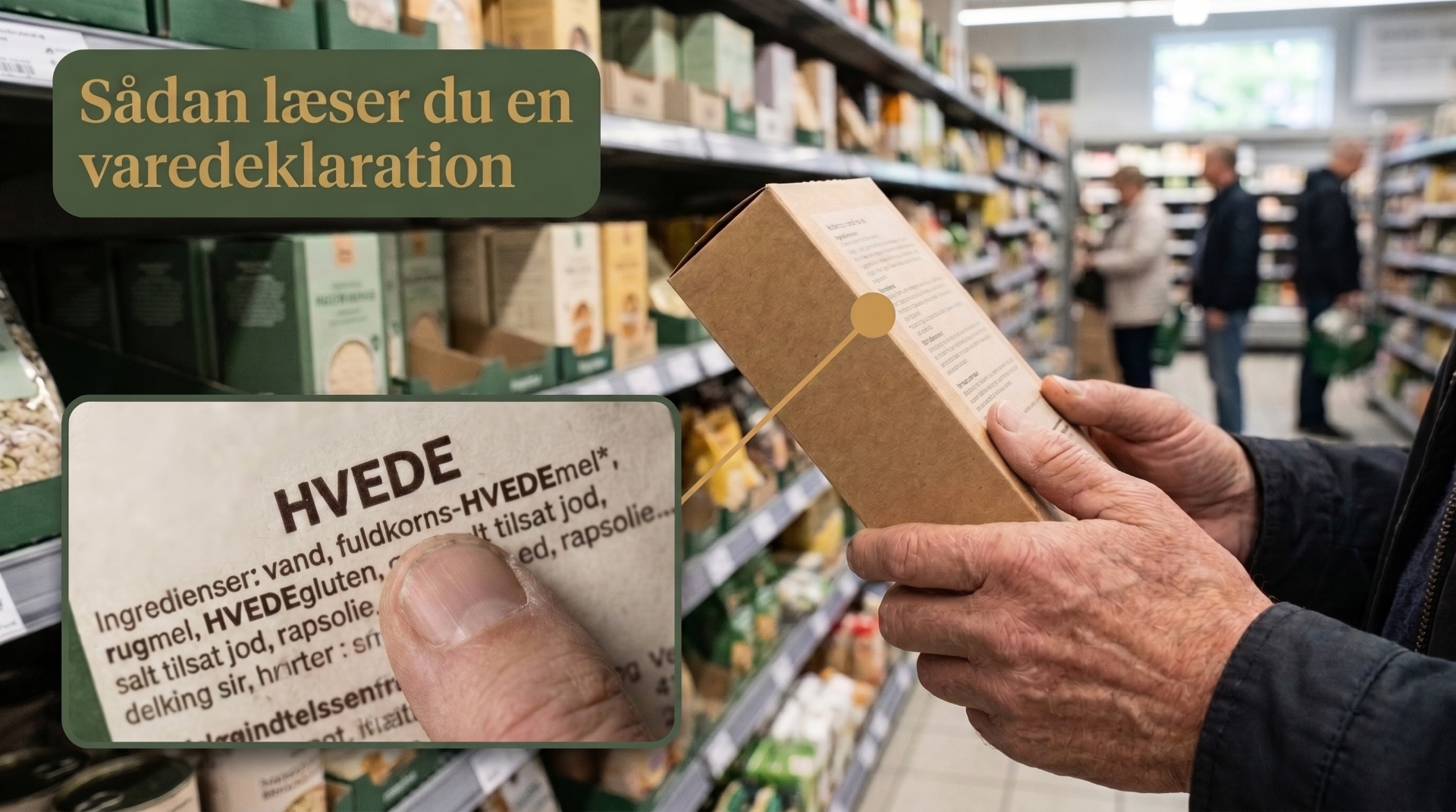
Always read the ingredient list - check whether wheat, rye, barley, malt or "gluten" appears (allergens are typically emphasized in bold). If you are in doubt, choose a product labeled "gluten-free". Recipes change, so check every time - including on a product you have bought for years.
Soy is not soy sauce
Soy and soybeans (edamame, soy milk, soy protein) are naturally gluten-free - a legume, not a grain. Soy sauce, on the other hand, is a brewed product that is often made from both soybeans and wheat. The wheat in the sauce is the problem - not the soy.
How to read the label: under EU rules, wheat must be emphasized in the ingredient list when it is in the product. If "wheat" is not there, the sauce is free of wheat gluten. What you often see emphasized is "soy" - because soy is itself an allergen, not because there is wheat in it. Choose tamari, which is usually brewed without wheat, but always check the label.
The products you'd least expect
Deli meats and meat products
- Liver pâté (thickened with wheat flour)
- Sausages, meatballs, ground-meat products (flour or breadcrumbs)
- Breaded meat and fish (breadcrumbs)
- Sliced meats and fresh sausage (wheat starch)
Sauces, dressings and seasonings
- Gravy and sauces (thickened with flour)
- Soy sauce (usually brewed with wheat - choose tamari, which is often gluten-free, but always check the label)
- Mustard, ketchup, dressings (wheat starch)
- Spice blends and bouillon (flour)
Candy, snacks and drinks
- Licorice (wheat flour)
- Seasoned chips (malted barley)
- Beer (barley - gluten-free beers exist)
- Some gummy candy and sweets (may contain wheat starch)
The truly unexpected
- Oats (not a gluten grain, but avoid ordinary oats - choose certified gluten-free)
- Baking powder and some thickeners
- Medication and supplements (wheat starch as a filler)
- Older envelope and stamp glue, and modeling clay
Oats - a special case
Oats are not a gluten grain (they contain avenin, not gluten), but ordinary oats are almost always contaminated with gluten - choose certified gluten-free oats. Most people tolerate them; around 5-8% react to the avenin itself, which can damage the gut without causing symptoms, and the "gluten-free" label does not measure avenin.
"May contain traces of gluten" - what does it mean?
Short answer
"May contain traces of gluten" is a voluntary precautionary statement with no threshold behind it - and its absence is not a guarantee either. What you can steer by is the "gluten-free" label (below 20 ppm, regulated and tested). Read the full breakdown with measurements and sources →
Wheat starch - not automatically off limits
Refining makes the difference
Not all wheat starch is a problem. In products labeled "gluten-free" it has been refined to below 20 ppm and is considered safe for most people. Wheat-based glucose syrup, dextrose and maltodextrin are refined enough to be exempt from allergen labeling in the EU. Only ordinary, unrefined wheat starch needs to be avoided.
Safety is not the only consideration, though: gluten-free wheat starch is also nutritionally poor - pure starch with little fiber, protein or micronutrients. Some people leave it out for that reason, not because it is unsafe, but because they want more nutrition from what they eat.
If you are highly sensitive
Some people with celiac disease react to amounts well below the legal limits. If that is you, be stricter than the labels require: cook more from scratch, keep your own kitchen tools separate, and ask manufacturers about specific products rather than guessing.
How to read an ingredient list
- Look for the gluten grains: wheat, rye and barley (usually emphasized in bold)
- Oats are not a gluten grain - but avoid ordinary oats due to contamination, choose certified gluten-free
- Hidden words: malt, malt extract, spelt, semolina, couscous, bulgur, durum, farro, einkorn
- "Gluten-free" (below 20 ppm) and the crossed grain symbol are tested safe for most people
- "May contain traces of gluten" is a voluntary precautionary statement - mainly aimed at wheat allergy
Our own best advice
The more you make from scratch, the fewer traps. A sauce thickened with cornstarch, a pâté mixed at home - then you know exactly what is in it.
Frequently asked questions
Where does gluten hide in food?
Most often in thickened sauces and gravies, bouillon, marinades, sausages and ground-meat products, licorice, beer, malt, crackers, snacks, ready meals and some candy. Always read the ingredient list - even a "neutral" product can contain wheat.
Are oats gluten-free?
Oats are not a gluten grain (they contain avenin, not gluten), but ordinary oats are almost always contaminated with gluten - choose certified gluten-free oats. Most people tolerate them; around 5-8% react to the avenin itself, which can damage the gut without causing symptoms, and the "gluten-free" label does not measure avenin.
Do I need to watch anything besides food?
Yes. Check supplements, medication, toothpaste, lip balm and modeling clay. Some products contain wheat starch or malt as a binder.
Is wheat starch always off limits?
No. In products labeled "gluten-free", wheat starch has been refined to below 20 ppm and is considered safe for most people. Wheat-based glucose syrup, dextrose and maltodextrin are refined enough to be exempt from allergen labeling in the EU. Only ordinary, unrefined wheat starch needs to be avoided.
Our app GlutenTrace reads the ingredient list for you and marks the gluten sources. It's free.